East Harlem Arts Symposium
Presented by:
State Senator José M. Serrano
& Manhattan Community Board 11
Saturday, May 17, 2008
East Harlem Arts Symposium
The Reece School
25 East 104th street
1:00PM — 4:00PM
Presented by:
State Senator José M. Serrano
& Manhattan Community Board 11
Saturday, May 17, 2008
East Harlem Arts Symposium
The Reece School
25 East 104th street
1:00PM — 4:00PM
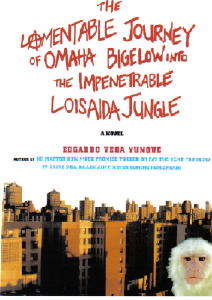
“THE LAMENTABLE JOURNEY OF OMAHA BIGELOW INTO THE IMPENETRABLE LOISAIDA JUNGLE”
BY
ED VEGA YUNQUÉ
A TRIBUTE TO THE AUTHOR
NON-STOP READING OF THE NOVEL
SATURDAY, NOVEMBER 15, 3PM – 7PM
MediaNoche
1355 Park Avenue, Corner Store
(at East 102nd Street)
New York, NY 10029
www.medianoche.us
212.828.0401
BRING YOUR COPY! IF YOU ARE INTERESTED IN READING, CONTACT US
AT info@prdream.com OR CALL US.
MediaNoche is a project of PRdream.com. Its programs are made possible with the support of NYSCA, DCA, Manhattan Borough President Scott Stringer, NYC Councilwoman Melissa Mark-Viverito, NYS Senator José M. Serrano, NYS Assemblyman Adam Clayton Powell IV, and others like you!
View the webcast at blogtv.com at 3PM on Saturday, November 15!
GO TO:
MediaNoche– Broadcast your self LIVE
Boxing’s renaissance man Jose Torres commanded ring & respect
by Mike Lupica
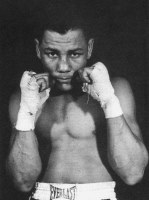
For the old-timers, the ones who come out of fight nights at the old Garden and out of a much older New York, it will always be 1965 for Jose Torres, when he was young. It will be the night at the old Garden when he beat Willie Pastrano, dancing and jabbing and finally body-punching his way to a TKO. He became the light-heavyweight champion of the world that night and seemed to have won the championship of the city as well. Jose Torres came from Puerto Rico, but by then he was more here than there.
The next day he made his first stop as champ at 110th and Lexington Ave., climbed up on a fire escape and addressed a crowd of thousands.
“This is for everybody,” he said, and told the crowd that if he could do something like this in the city of New York, anything was possible.
But he was so much more than just a prizefighter, even if that is how the world first knew him. He became the first Latino columnist in town, at least in an English-language paper, when my old boss, the great Paul Sann, put him to work at the old New York Post. He would later become a commentator on television, and radio host, and in the 1980s even became the New York State Athletic Commissioner.
He was a friend to Norman Mailer, who was once brave enough to get into the ring with him, and Pete Hamill. He once said that Pete had given him his first book and how he now owned more than 800 of them, and was confident that “Pete’s responsible for six or seven hundred.” He had a good enough voice to sing a ballad one time on the Ed Sullivan Show.
“I keep telling you,” he used to say to me, “I am more a lover than a fighter.”
Jose Torres wrote books about Muhammad Ali and Mike Tyson, and spent so much time trying to save Tyson from himself and what he called the “parasites” around him. And became a friend to Robert F. Kennedy when Kennedy became the U.S. senator from New York.
Kennedy wanted to learn about the city, to know the city, and not just the avenues of power in Manhattan. So Hamill and the late Jack Newfield became guides for him in those years. So did Jose Torres. They would get in the car at night and drive the neighborhoods of Brooklyn, get out and talk to the people who lived in them. A Kennedy doing this, and the kid from Puerto Rico who had won a silver medal in the ’56 Summer Olympics, won the 160-pound division of the ’58 Golden Gloves, would later end up in the International Boxing Hall of Fame in Canastota, N.Y.
And Kennedy and Jose Torres would talk through the night. One of the things they talked about was what Robert Kennedy talked about in speeches in those days, about how within 40 years a man of color would be President. It was why Torres thrilled so much to the run Barack Obama made to the nomination and finally to today, even though he was back in Puerto Rico by last year, there to write and grow old as gracefully as he had fought once.
Pete Hamill said Monday that the last time he talked to Torres, his dear friend of half a century, was 10 days ago.
“It’s amazing, Pete, this country – what a place. What an amazing place,” Torres said to Hamill on the phone that day. He was talking, of course, about Obama.
Jose Torres did not make it to Obama’s inauguration. Did not make it to today. Did not live long enough to hear Obama, whom he believed was the heir to Kennedy’s ideals and compassion and spirit, give his speech today.
Jose Torres died in his sleep early Monday, at the age of 72. He suffered from diabetes and his friends believe that his body was never right after the pounding he took from Tom McNeely, a heavyweight, in Puerto Rico in 1965. It was a non-title fight and Jose ended up winning it, but McNeely brutally worked Jose’s body that night.
Jose finally lost his title to Dick Tiger, a future Hall of Famer the same as Willie Pastrano, the same as Jose. It was some amazing time in their division. Then Tiger beat him a second fight at the Garden, even though that one nearly caused a riot when it was announced that the decision had gone against Jose. He fought twice more after that and then retired.
And this wasn’t the beginning of some slow, sad ending for a retired boxer who had taken too many shots to the head. This was the beginning of a joyful, amazing life, one so well-lived and so well-enjoyed, in the city of New York.
For the next four decades he lectured and wrote his books and became Commissioner Torres finally. His last columns were for El Diario. At the boxing Hall of Fame, he is described this way: “Boxing’s renaissance man.” He was all that, a splendid ambassador for the island of his birth and the city he adopted and of his sport.
He was a lover: of his boxing career, of being a champion, of being a writer, of knowing that books he wrote, in his second language, would be on library shelves forever. More than anything he would have loved Barack Obama’s speech today, about the world Jose Torres imagined once from a fire escape on 110th Street, one where anything really is possible.
By DAVID GONZALEZ
New York Times (August 3, 2009)
Befitting a scrappy, independent political pioneer – in 1978 she was the first Puerto Rican woman elected to a state legislature in the United States – her funeral attracted the governor, the mayor, several members of Congress and countless local officials. She was lauded for many things: her tenacity; her willingness to cross party lines; her embrace of labor, housing and educational rights for the poor. She was eulogized as a loyal friend, a fierce competitor and a proud Puerto Rican.
Outside the Church of the Holy Agony, on Third Avenue at 101st Street, beyond the honor guard of construction workers that flanked her hearse, groups gathered by the housing projects to remember La Senadora, and the friends and relatives who got a hand up because of her.
“I don’t think we’ll ever see another one like her,” said Monin Paez, who said she always voted for Senator Méndez. “When she spoke, you had to listen. The politicians today don’t talk to us. They only come by when they want your vote.”
Senator Méndez died from cancer last week at age 84. Married into a politically savvy East Harlem family – and possessed of no small measure of education and determination herself – she found her resolve tested in the State Senate, friends said. But she threw herself into her work, giving as good as she got.
“Many of you have gone toe to toe with her in political battles,” her niece, Annette Vasquez, told the mourners. “But later you would walk away with her arm in arm in friendship and respect.”
Just don’t play games with her.
“When you played Risk with Olga, it was never a game,” she said. “It really was about world domination!”
Among the politicians attending were Representatives José E. Serrano, Nydia M. Velázquez and Charles B. Rangel; the former Bronx borough president Fernando Ferrer; the city comptroller, William C. Thompson Jr.; and State Senator Pedro Espada Jr. Efraín González Jr., Mr. Espada’s predecessor, who recently pleaded guilty to using $200,000 in state funds for vacation homes and other personal expenses, was also there.
Some may have felt themselves in the crosshairs as Gerson Borrero, a fire-breathing columnist and political commentator, delivered his eulogy praising Senator Méndez.
“She worked hard behind the scenes while others pranced around like peacocks,” he said. “They still prance around like peacocks.”
Outside, there was a plainspoken pride among the construction workers who sweated for the duration of the Mass.
“Olga always did the right thing for El Barrio,” said one worker, Marty Torres. “She was about change. She was no punk.”
The plain setting for her funeral was fitting: not the marbled St. Patrick’s Cathedral – though she was well-connected enough to have had her service there – just the simple linoleum tile and plywood walls of Holy Agony, where she had been a loyal parishioner since the 1950s. Opened in 1953, it was built for the Puerto Ricans settling in El Barrio – old timers said it was the first local church where they celebrated in the main sanctuary, not hidden in some basement.
In the days before the funeral, friends recalled Senator Méndez, too, as visible and approachable. She asked about your children and treated you like family. She relished telling stories with a mischievous smile and a raspy voice. And she was fiercely Puerto Rican – not Latina, not Hispanic.
“She is the last of her kind,” said Gloria Quinones, a lawyer and activist often on the far left of the senator. “She represented reassurance that the community had a fighting voice and someone who loved them.”
Ms. Quinones remembers when she finished law school and Ms. Méndez asked her if she wanted to become a judge.
“To get me out of the way,” she said.
“But she always asked me how my boys were,” she added. “She was like that with everybody. At the same time she was always calling and asking me if I was going to run against her.”
Others noted that while she had sharp political instincts, they were further honed when she married into the Méndez family, whose patriarch, Antonio Méndez, was the first Puerto Rican district leader in Manhattan. Her mother-in-law, Isabel, was equally political.
“She pushed Olga,” said Carmen Villegas, a family friend. “She knew how to move the chairs like chess pieces. She worked in the senator’s office until she died. And she never called her Olga. She always called her La Senadora.”
The two women were just as devoted to Holy Agony, staying active and donating statues to the church over the years.
An urn with her ashes was set before the altar, flanked by the United States and Puerto Rican flags. Two state troopers stood smartly on either side. The Rev. Victor Elia did the final blessing, and people applauded as the urn was carried to the waiting hearse for burial in the Bronx.
Outside, under a glorious sun, a group of elderly women broke into song as the hearse prepared to leave. Wrapped in the Puerto Rican flag, they intoned Rafael Hernandez’s “Lamento Borincano,” the unofficial anthem of Puerto Rico. It is a song about hardship, hope and heartbreak.
It can never be sung without tears.
NY rites set for Latina political pioneer
The Associated Press (July 31, 2009)
NEW YORK (AP) – A funeral will be held Monday for former New York state Sen. Olga Mendez. She was the first Puerto Rican woman elected to a state legislature in the mainland United States.
Mendez, who was 84, died Wednesday at her East Harlem home. She had been diagnosed with cancer.
The funeral Mass will be held Monday at the Church of the Holy Agony in Manhattan. She will be buried in the Bronx.
Mendez was a state senator from 1978 to 2004. She wielded tremendous political influence in the Hispanic community and beyond.
Republican-turned-independent Mayor Michael Bloomberg said Mendez helped him see the wisdom of reaching across partisan lines to “do what’s right for your constituents.”
Mendez lost her seat after switching parties, from Democrat to Republican.
News Release
Wed, 07/29/2009 – 10:24pm
FOR IMMEDIATE RELEASE
Contact: Clark Pena -646-251-1295
Late Senator Olga Mendez
Political Icon Dies in NYC
Former NYS Senator Olga Mendez died in her sleep Wednesday morning at 1:10 AM in her East Harlem apartment.
Funeral arrangements are being handled by the Campbell Funeral Chapel in Manhattan. The Senator had requested that she be cremated, and on Monday morning there will be a funeral mass, with her remains present, at her church, the Church of the Holy Agony 1834 3rd Avenue (101st Street). The time will be 9:00 AM.
Her nephew said, “She was ready. She had been under a lot of pain for the last five months. She did it on her terms, and died very peacefully.”
Olga Mendez was born Olga Aran in Mayaguez, Puerto Rico on February 5th, 1925. Her burial will take place at St. Michael’s Cemetery in the Bronx. In lieu of flowers, the Senator had requested donations be made, in her name, to the Boriken Health Center at Taino Towers in East Harlem. As she had requested, there will be no viewing or wake.
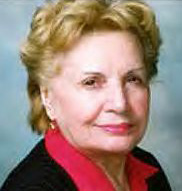 Born in 1926 in Mayaguez Puerto Rico, her academic accomplishments are trumped only by her extensive work in public service. After earning her bachelor’s degree from the University of Puerto Rico, Mendez earned a Master’s Degree in Psychology from Columbia University, followed by a PhD in Educational Psychology from Yeshiva University.
Early in her career, Mendez was a strong advocate for improving social services in the community, and became a dynamic leader in the organization of voter registration drives throughout the country. She was elected Senator to the New York State Legislature in 1978, becoming the first Puerto Rican woman to hold the honor in the State of New York.
Mendez was elected as a delegate for the Democratic Conventions of 1980, 1984, and 1988. During her time in the New York State Senate, she served as Secretary of the Minority Conference in 1984, and in 1993 earned the honor of becoming the first Puerto Rican woman to be chosen as Chairperson of the Minority Conference.
In 2004, PRdream honored Senator Olga Mendez when she left office with a reception and performances by Teatro Circulo and El Trio Nueva York at its gallery then on East 106th Street.
For Immediate Release
September 25, 2007
Contacts:
Antonieta Gimeno (646) 672-1404, cell 917-981-1625
Janice Cruz (646) 672-1404
Seventh Annual NYC Brides’ March Against Domestic Violence
Wednesday, September 26, 2007
Scores of “Brides” and Supporters Will March Through Manhattan and the Bronx to Remember Gladys Ricart and Other Victims of Domestic Violence
For the seventh year in a row, scores of women dressed in wedding gowns, along with men dressed in black, will march through the streets of Washington Heights, the South Bronx, and East Harlem to raise awareness about the devastating effects of domestic violence on Latino and other families and communities.
Marchers will start gathering at 9 a.m. in front of the offices of the Dominican Women’s Development Center at 251 Fort Washington Avenue where they will hear from some of the march organizers. The six-mile march will begin promptly at 10:30 a.m. and will end after 3 p.m. in East Harlem at the Bonifacio Senior Center, 7 East 116th Street with a speak-out and closing ceremony (see attached march route).
The Brides’ March, also known as The Gladys Ricart and Victims of Domestic Violence Memorial Walk, is an annual event that was started in 2001 to remember Ms. Ricart, who was murdered by a former abusive boyfriend on the day she was to wed someone else, and all the other women who have been killed or injured in domestic violence incidents (see chronology of events attached). Because the wedding dress, the emblem of happiness and everlasting love, has been forever tainted in the Latino community by Gladys’ murder, it is a strong symbol for the New York Latinas Against Domestic Violence (NYLADV), the main organizers of the March.
Marchers will be joined by Josie Ashton, a Dominican woman from Florida who originated the idea for the first march, after being strongly moved by the murder, slanted media coverage, and some community members’ insensitive response to Ms. Ricart’s murder. Ms. Ashton resigned from her job and sacrificed more than two months of her life away from her family to walk in a wedding gown, down the East Coast, from New Jersey to Miami, in an attempt to draw attention to the horrors of domestic violence.
Local government officials and community figures including Manhattan Borough President Scott M. Stringer, Bronx Borough President Adolfo Carrion, NYS Senator Erik T. Schneiderman, Assembly Member Adriano Espaillat, Commissioner Yolanda Jimenez from the NYC Mayor’s Office to Combat Domestic Violence, Council Members Melissa
Mark-Viverito, Robert Jackson and Miguel Martinez, will also join the marchers and speak during the day’s events.
Dozens Of Deaths And Hundreds Of Thousands Of Domestic Violence Incidents Reported Each Year In New York City.
According to the NYC Mayor’s Office to Combat Domestic Violence, there were 71 family related homicides in 2006 as of December 31, 2006. Family related homicide includes intimate partner homicide as well as homicide committed by other family members and includes children who were killed as a result of family violence. 83% of these cases had no known prior police contact and 6% of these cases had a current Order of Protection. At present, there are 2,081 domestic violence emergency shelter beds citywide, a 35% increase since January 2002.
In addition, according to the Mayor’s Office, the police responded to 221,071 domestic violence incidents in 2006; this averages to over 600 incidents per day. And teen dating relationship abuse continues to be a problem as well. The City Domestic Violence Hotline received 9,462 calls from teens in 2006.
Rosita Romero, Executive Director of the Dominican Women’s Development Center said “domestic violence is not a women’s problem; it is a problem that affects the entire family and our society as a whole. It is also connected to other types of violence in our society. We have to find better ways of relating to each other as human beings; on a more equal level and with more kindness and compassion. We need to educate ourselves more about this pandemic to make a bigger commitment to prevent it and eradicate it.”
Josie Ashton who will address the marchers during the rally at the Bonifacio Senior Center stresses that “we continue with our commitments to every woman, man and children to work hard every day to fight domestic violence. Our hope is that our government and members of our community will do the same.”
A partial list of sponsors for the 2007 NYC Annual Brides’ March include:
New York Latinas Against Domestic Violence, the Ricart family, Josie Ashton, Nuevo Amanecer, Violence Intervention Program, Dominican Women’s Development Center, The National Latino Alliance for the Elimination of Domestic Violence, Northern Manhattan Improvement Corporation, Assembly Member Adriano Espaillat, National Dominican Women’s Caucus, Anthony Diaz from Fortune Society.
A partial list of participating individuals and organizations include:
Bronx Borough President Adolfo Carrión, Manhattan Borough President Scott Stringer, State Senator Eric T. Schneiderman, Congress Member Charles B. Rangel’s Office, Seny Tavera Special Counsel to Lieutenant Governor David Patterson, Crucita Medina Martinez, Bonifacio Senior Center, NYC Mayor’s Office to Combat Domestic Violence, NYC Mayor’s Office on Immigrant Affairs, New York City Police Department, New York City Department of Sanitation, Assembly Woman Noemi Rivera, Council Member Miguel Martinez, Council Member Robert Jackson, Council Member Helen Foster, Council Member Melissa Mark-Viverito, Jorge Abreu from Heritage Health Housing, Reverend Luis Barrios from the San Romero de las Americas Church, Reverend Hector Laporte, Lucy Pizarro of Levántate Mujer, Planned Parenthood, CONNECT, In Motion.